Settings & Locations
Air Quality in Gyms and Fitness Centers
By Jason Curtis · 5 min read · Updated 2026-05-22
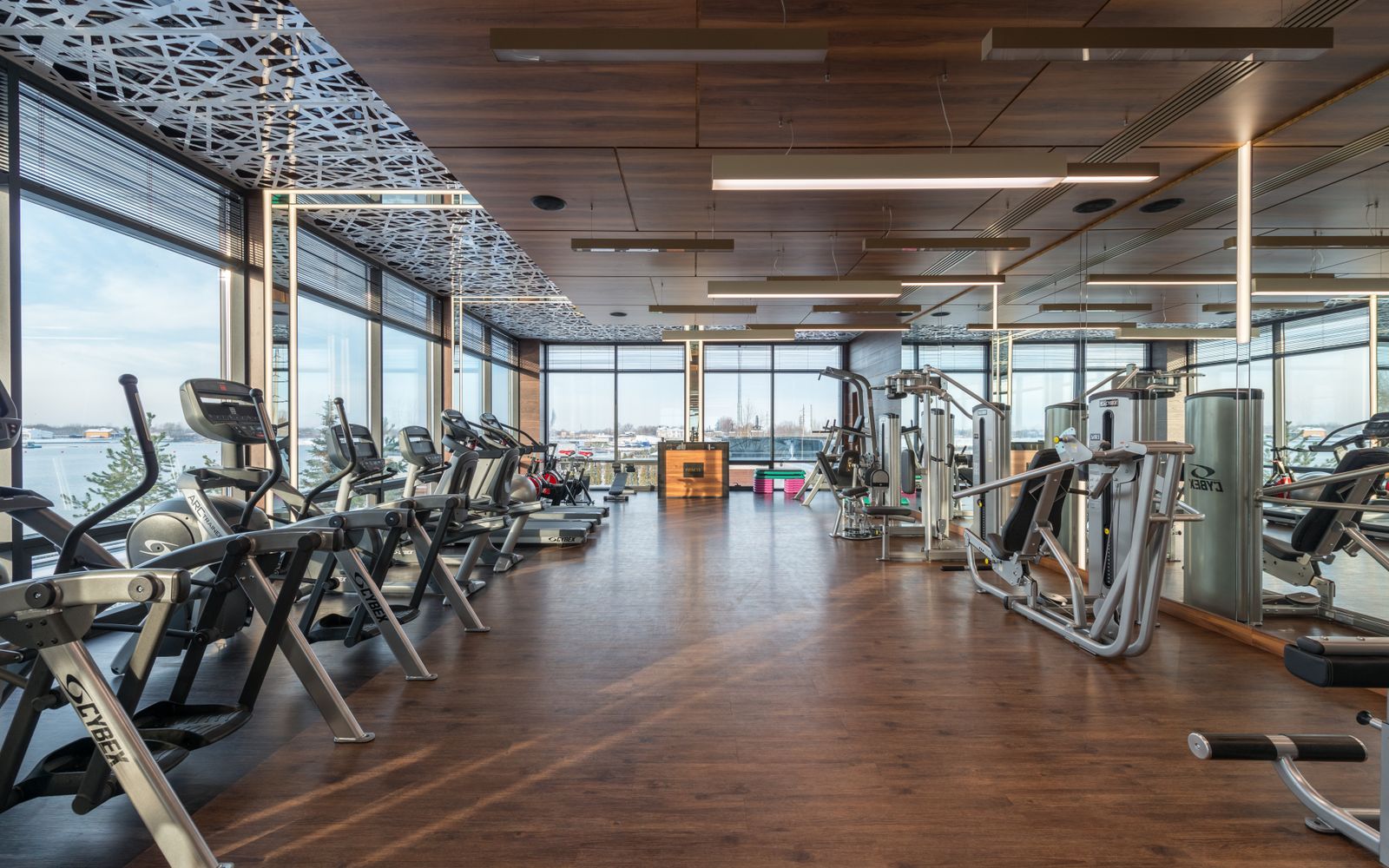
You go to the gym to be healthier. During a hard workout you breathe roughly 10 times more air per minute than at rest, which means whatever is in the gym air gets ten times the dose into your lungs. That makes indoor air quality at gyms a real, often overlooked, factor.
What's in gym air
A crowded fitness facility produces a distinct pollutant mix:
- PM2.5 and PM10 from skin flakes, fabric fibers, foot traffic on mats, and resuspended dust. Studies have measured gyms running 2 to 3 times higher PM than typical indoor spaces during peak hours, with averages around 35 micrograms per cubic meter (above WHO's 15 microgram annual guideline).
- CO2 from heavy breathing. Group fitness studios, spin rooms, and busy weight floors often exceed 1,500 ppm, well past ASHRAE's classroom-level comfort range. Some peak above 3,000 ppm.
- VOCs and formaldehyde from rubber flooring, mats, equipment off-gassing, cleaning sprays, disinfectants, and air fresheners. New facilities and recently remodeled ones are usually worst.
- Bioaerosols from sweat, skin bacteria, and occasionally fungal spores. Locker rooms with poor humidity control can grow mold.
- Chlorine byproducts in facilities with attached pools (chloramines from chlorine reacting with sweat and urine), which can trigger asthma in swimmers and trainers.
Rubber gym flooring (recycled tire mats) is a known VOC source. The off-gassing smell of a new fitness studio is real.
Why the dose matters more here
Resting ventilation rate is about 6 liters per minute. Moderate exercise pushes that to 30 to 50 L/min, and hard intervals can hit 100 to 150 L/min. So:
- The same PM2.5 level that's a mild annoyance at rest delivers a much higher inhaled dose during a workout.
- More of that PM penetrates deeper into the lungs because mouth-breathing (common under exertion) bypasses nasal filtering.
- Recovery breathing after intervals keeps ventilation elevated for several minutes.
This is why a "low" indoor PM reading still matters at a hard-training gym.
Who is most affected
- People with asthma and exercise-induced bronchoconstriction. Cold dry air at outdoor workouts, chlorinated pool air, or VOC-laden fitness studios can trigger symptoms.
- Endurance athletes training high volumes get the largest cumulative exposure.
- Group fitness instructors and gym staff who spend 30 to 50 hours a week in the space.
- Pregnant people working out indoors. Higher minute ventilation plus indoor pollutants compound exposure.
- Children at youth fitness or sports programs in older school gyms with weak HVAC.
Local factors
Gyms vary a lot. Watch for:
- Ventilation design. Modern facilities use ERVs or HRVs to bring in filtered outside air without losing conditioning. Older gyms often recirculate stale indoor air with minimal outdoor make-up.
- Square footage per person. A boutique studio at 90 percent capacity hits high CO2 fast. A big-box gym at the same percentage handles load better.
- Time of day. 6 to 8 a.m. and 5 to 7 p.m. are peak hours with the worst CO2 and PM readings. Off-peak is consistently cleaner.
- Equipment age and flooring. New rubber and foam = high VOCs. Old worn surfaces = more dust and microfiber particulate.
- Cleaning chemistry. Heavy quat-ammonia or bleach disinfectants between classes release VOCs for hours.
- Pool proximity. Air shared with a pool can carry chloramines.
What you can do
- Bring a CO2 sensor. Pocket-size CO2 monitors are under $200. They're the fastest way to read whether a gym is being ventilated well during your workout.
- Train off-peak when you can. Even an hour earlier or later makes a difference.
- Pick gyms with windows that open and HVAC visible upgrades (ERVs, MERV 13+ filters, posted maintenance logs). Ask the manager.
- Avoid the freshly cleaned spin room. Wait 15 to 30 minutes after heavy disinfection if you can, or pick a different class slot.
- Outdoor training when air is good. On low PM and ozone days, an outdoor run is often cleaner than indoor lifting.
- Skip outdoor cardio when AQI is bad. Above an AQI of 100 to 150, indoor workouts (in a well-ventilated gym) usually win.
- Check your gym's HVAC story. A facility that knows its MERV rating and refresh rate is one that cares. Vague answers tell you something.
- For owners and operators: add CO2 monitors per room, upgrade to MERV 13, post the data, and choose low-VOC flooring on the next renovation.
Sources
- Atmotube: Importance of Air Quality in Gyms
- Smart Air: How Safe is the Air Quality in Gyms?
- IQAir: How air quality affects exercise performance and health
- European Review: Effects of air pollutant exposure on lung function in exercisers (PDF)
- Air Pollution and Respiratory Responses During Outdoor Exercise, Scoping Review (PMC)
- Effects of physical exercise on cardio-respiratory health under varying air pollution (PMC)
- ASHRAE Position Document on Indoor Carbon Dioxide
This article is for educational purposes only. Canairy does not provide medical advice, diagnosis, or treatment. Talk to a qualified health professional about your specific situation.