Daily Life
Cooking Timing and Ventilation
By Jason Curtis · 4 min read · Updated 2026-05-22
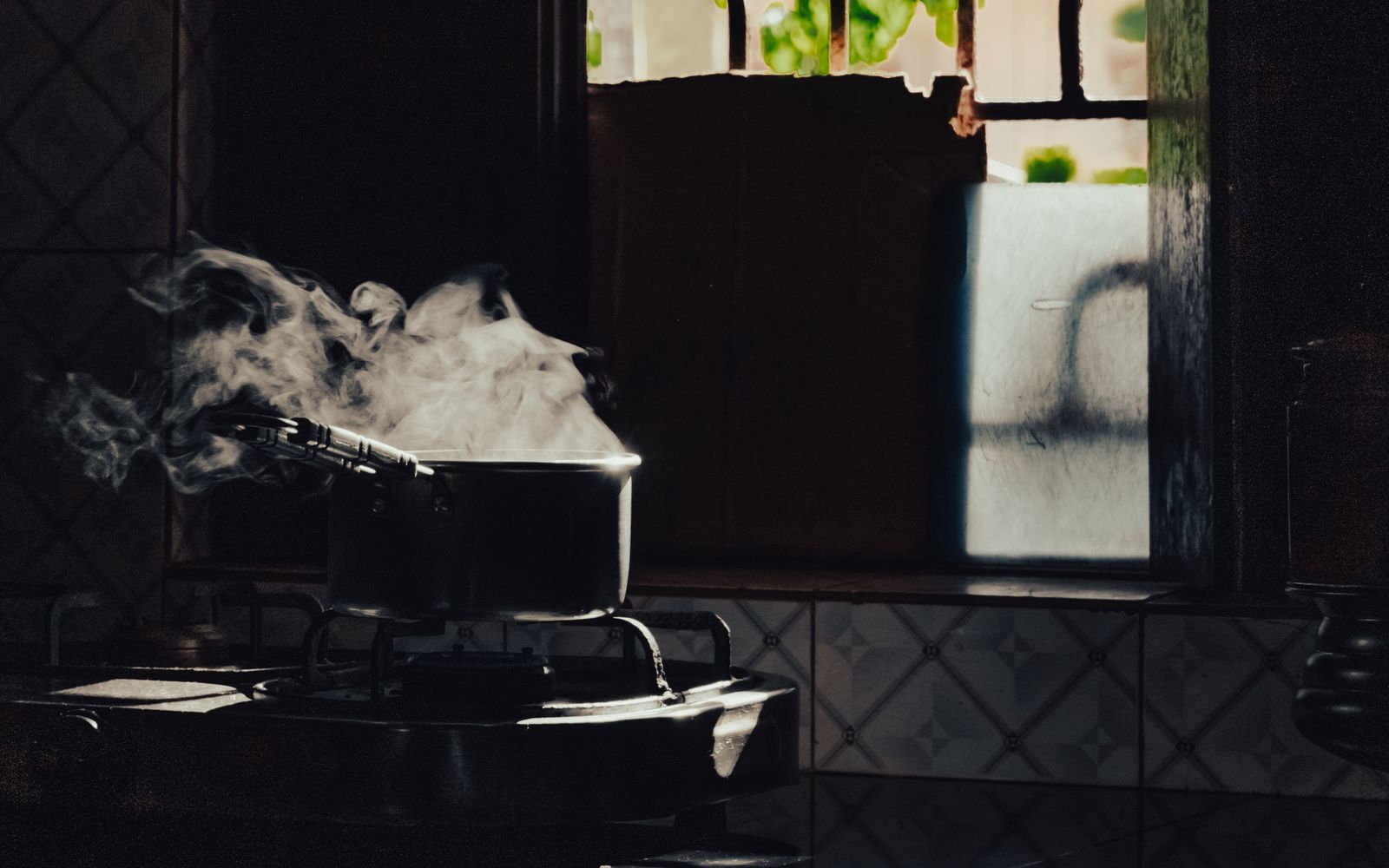
Cooking is the single biggest source of indoor PM2.5 in most homes. The good news: you can cut your exposure 80% or more with timing and habits you already control, no equipment upgrade needed.
Why this matters
Berkeley Lab measurements show kitchen PM2.5 routinely spikes to 200 to 1,400 µg/m³ during cooking, peaking 1 to 7 minutes after the burner goes off. For reference, the EPA's 24-hour PM2.5 standard is 35 µg/m³. A single stir-fry can outrun the daily limit in 10 minutes.
Gas burners add nitrogen dioxide (NO2) and carbon monoxide on top of the particles. The American Public Health Association notes gas stove use correlates with higher childhood asthma rates, partly through NO2 exposure.
What the science says
When you run the hood matters more than the hood's rating. Studies from Lawrence Berkeley National Laboratory found that range hoods only protect indoor air if you actually turn them on. National survey data shows fewer than 30% of households run the hood every time they cook.
Back burners are easier to capture. A Berkeley Lab study of seven residential hoods found capture efficiency ranged from below 15% to above 98%. Back burners captured better in every model because hoods usually overhang them more fully. ENERGY STAR-qualified hoods captured under 30% on front burners and oven vents.
Outdoor air matters when you ventilate. Cracking a window during cooking helps, but only if outdoor AQI is decent. On a smoke day or smog day, you're trading indoor cooking particles for outdoor ones.
What to do tonight
Turn the hood on before you turn the burner on. Run it the entire cook plus 10 to 15 minutes after. The post-cook spike happens because hot grease and aerosols keep offgassing.
Cook on the back burners whenever possible. This single change can double the share of pollution your hood captures.
Open a window across the room when the hood runs, especially with no over-range exhaust or with a recirculating microwave hood (those filter, they don't vent outside). Cross-flow gives the hood replacement air and helps clear what escapes.
Time heavy cooking for clean outdoor air. If you're searing, deep-frying, or roasting meat (the big PM emitters), check outdoor AQI first. Cook these on green days when you can open windows fully after. On red days, delay or switch to lighter methods (boiling, steaming, slow cooker).
Push the air purifier into the kitchen. A portable HEPA unit a few feet from the stove catches what the hood misses. Run it on high through the cook and for 30 to 60 minutes after.
Lid your pots and avoid pre-heating empty pans. Both cut aerosol release substantially.
Skip the self-cleaning oven cycle on a bad air day. The pyrolytic cycle releases significant PM and VOCs. Run it when you can open the kitchen wide for an hour after.
Quick checklist
- Hood on before cooking, off 10 to 15 min after
- Cook on back burners by default
- Window cracked across the room when hood runs
- Heavy cooking shifted to clean outdoor air days
- HEPA purifier near the kitchen, high during and after
- Self-cleaning oven only on good air days
Sources
- Berkeley Lab study assesses residential cooking exhaust hoods' ability to vent pollutants
- Performance Assessment of U.S. Residential Cooking Exhaust Hoods
- APHA: Gas Stove Emissions
- Washington DOH: Ventilation While Cooking
- Residential cooking-related PM2.5: Spatial-temporal variations
- Effective Kitchen Ventilation for Healthy Zero Net Energy Homes (CEC)
- Cooking methods and kitchen ventilation in Canadian homes
This article is for educational purposes only. Canairy does not provide medical advice, diagnosis, or treatment. Talk to a qualified health professional about your specific situation.