Settings & Locations
Living Near Agriculture
By Jason Curtis · 4 min read · Updated 2026-05-22
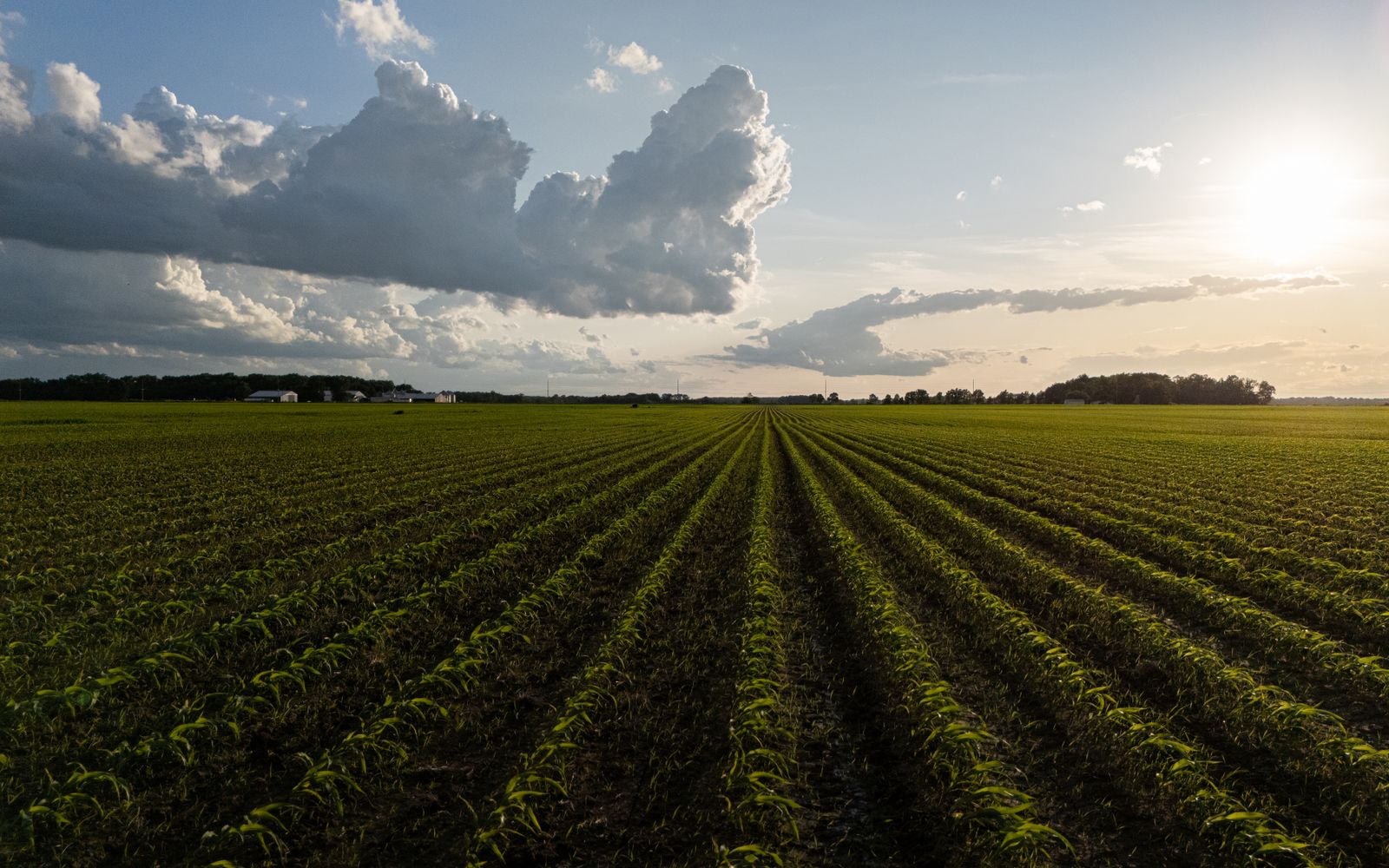
Rural and exurban addresses are often pictured as "clean air" by default. The reality is more mixed. Farming activity, from tractors and tillage to manure lagoons and pesticide spraying, produces measurable pollution that drifts into nearby homes and towns.
What's in the air there
Three big categories show up near working farms:
- Ammonia (NH3) from livestock manure and nitrogen fertilizer. Ammonia itself irritates lungs at high concentration, and in the atmosphere it reacts with sulfates and nitrates to form secondary PM2.5. Agriculture accounts for roughly 30 percent of PM2.5 in the United States and about 50 percent in Europe, mostly through this pathway.
- PM2.5 and PM10 from dust kicked up by plowing, harvest, unpaved roads, and wind erosion. Tillage-related PM2.5 alone is tied to thousands of premature deaths a year in the United States.
- Pesticide and herbicide drift. Spray droplets and volatilized vapors can travel from the application site. Dicamba and 2,4-D are well-documented for vapor drift that lingers and moves for days after application.
Livestock operations add hydrogen sulfide, methane, and a long list of volatile organic compounds from manure lagoons.
Local factors
Exposure varies a lot by what is grown nearby and how it is managed.
- Spring and fall fertilizer windows. Ammonia spikes during application, typically March to May and again at fall side-dress for corn country.
- Harvest dust. Wheat, almond, and cotton harvests produce visible dust plumes. California's San Joaquin Valley regularly logs PM2.5 exceedances tied to ag activity.
- Pesticide spray season. Aerial spraying and ground booms are most common in early morning when winds are calmest, which is also when temperature inversions can trap droplets near the surface.
- CAFOs (concentrated animal feeding operations) emit ammonia and odor compounds year round, with peaks during manure agitation and lagoon emptying.
- Field burning, still used for some rice, grass seed, and sugarcane operations, releases large PM2.5 plumes during burn season.
Who is most affected
Farm workers carry the highest exposure and risk. For neighbors:
- Studies in North Carolina and Iowa found reduced lung function and higher rates of self-reported asthma in residents living within 1.5 to 3 miles of large hog CAFOs. Predicted FEV1 was about 7.7 percent lower at 1.5 miles than at 3 miles.
- Children near CAFOs have higher asthma symptom rates and more medication use than peers farther away.
- People with chemical sensitivities, migraines, or existing respiratory disease often report worse symptoms during application and harvest windows.
Distance and timing
CAFO odor and gas impacts typically fade with distance but can be detected several miles downwind under the right conditions (calm nights, inversions, prevailing wind toward homes). Pesticide drift is most concentrated within a few hundred feet of the field but vapor drift from volatile products can travel much farther. Dust from tillage and unpaved roads usually settles within a few hundred meters but resuspends with each gust.
What you can do
- Know your neighbors and the calendar. Ask which fields are sprayed, what crops they grow, and when. Many states require pesticide use reporting; California's PUR database is public.
- Close windows during spraying, harvest, and manure events. If you can see dust or smell ammonia, the air outside is worse than inside a closed home.
- Filter what comes in. MERV 13 on the HVAC, plus a portable HEPA in the bedroom, helps with fine particles. Carbon-impregnated filters help with odors and some volatile organic compounds.
- Position fresh-air intakes carefully if you have mechanical ventilation. Away from the prevailing wind off the field is best.
- Plant a windbreak. Multi-row evergreen hedges reduce drift and dust reaching the house. Buffer strips also help with runoff.
- Document and report. If a spray event makes you sick, write down the date, time, wind direction, and symptoms. State ag departments take complaints, and a documented record matters if a pattern emerges.
Sources
- Ammonia emissions from agriculture and contribution to PM2.5, a review (ScienceDirect)
- Health burden of tillage-related PM2.5 in the United States (ScienceDirect)
- Residential proximity to CAFOs and allergic and respiratory disease (PubMed)
- Exposure to CAFOs and risk of mortality in North Carolina (PMC)
- Iowa CAFO Air Quality Study Final Report
- Health Effects of Airborne Exposures from CAFOs (PMC)
- The two-way relationship between agriculture and air pollution (Clarity)
This article is for educational purposes only. Canairy does not provide medical advice, diagnosis, or treatment. Talk to a qualified health professional about your specific situation.