Pollutant Guide
Radon
By Jason Curtis · 4 min read · Updated 2026-05-21
What it is
Radon is a colorless, odorless, tasteless radioactive gas. It forms from the natural decay of uranium and radium in soil and rock. Outdoors, it disperses to harmless concentrations. Indoors, it can build up to levels that significantly increase lung cancer risk.
Radon itself is a noble gas (chemically inert), but when it decays it produces a chain of short-lived radioactive solid particles called "radon progeny" or "radon daughters." These attach to dust and lung tissue and emit alpha radiation that damages cells.
Where it comes from
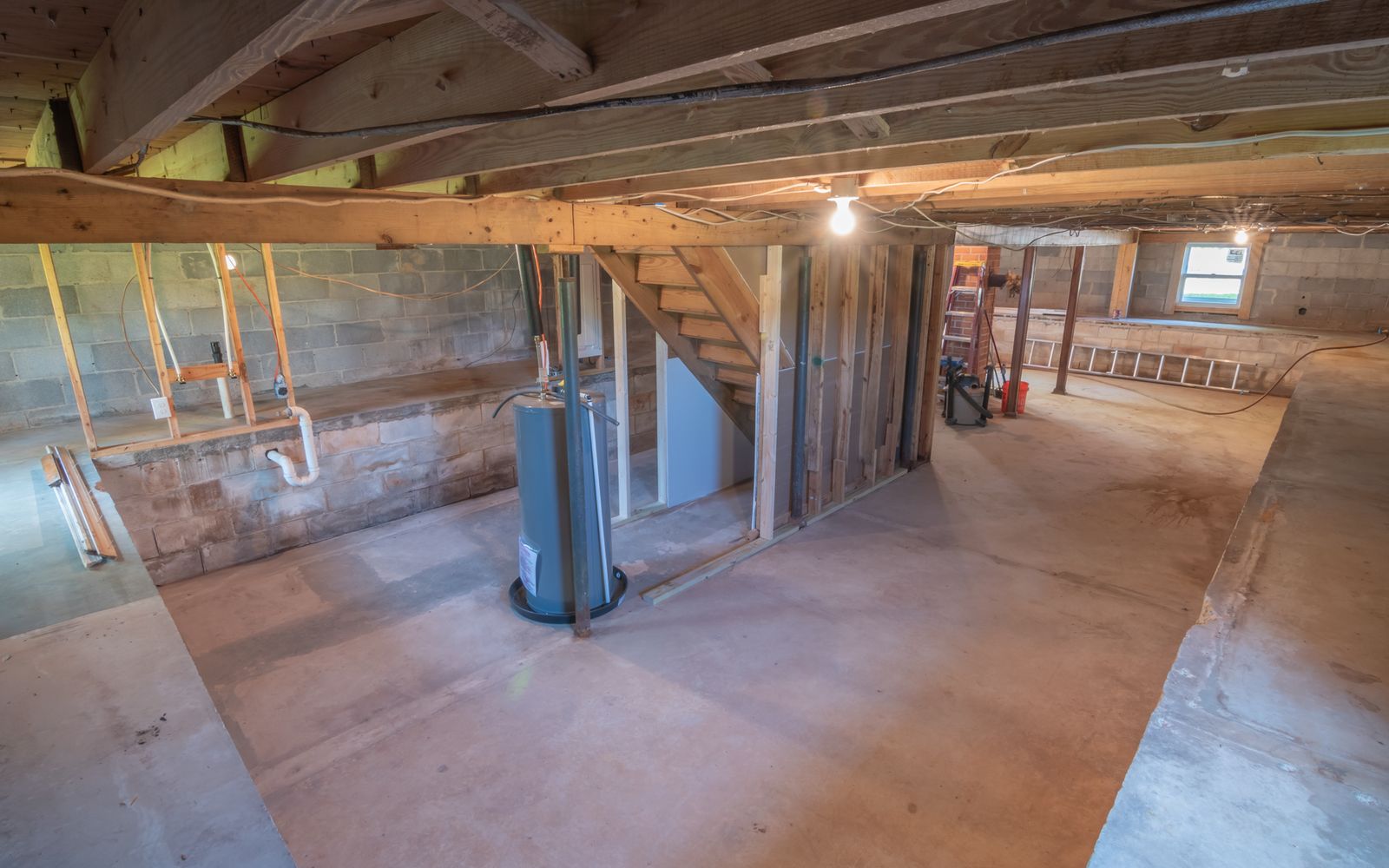
Radon enters homes from the ground beneath the foundation. It seeps through cracks in concrete slabs, gaps around pipes, sump pits, crawl spaces, and the pores in concrete block walls. Well water can release dissolved radon into indoor air during showering or laundry. Some natural stone (granite countertops, in rare cases) emits low levels.
Levels are highest in the lowest occupied level of a home, especially basements, and in winter when houses are sealed against the cold. Geology matters: parts of the Appalachian Mountains, the Upper Midwest, the Rocky Mountain region, and the Reading Prong (Pennsylvania to New Jersey) have particularly high radon potential, but high readings occur in every US state.
Health effects
Radon is the second leading cause of lung cancer in the US after smoking, and the leading cause among people who have never smoked. The EPA estimates radon causes about 21,000 lung cancer deaths per year in the US.
Risk scales with concentration and time. At the EPA action level of 4 pCi/L, a never-smoker has roughly a 7 in 1,000 lifetime lung cancer risk from radon alone. For a smoker at the same level, that risk jumps to about 62 in 1,000, because radon and tobacco smoke multiply each other's effects.
Radon does not cause acute symptoms. You will not feel sick from a high reading. The only health effect is a long-term increase in lung cancer risk, which is why testing is the only way to know.
How it's measured and typical levels
Radon is measured in picocuries per liter (pCi/L) in the US, or becquerels per cubic meter (Bq/m³) elsewhere (1 pCi/L = 37 Bq/m³).
Key benchmarks:
- US EPA action level: 4 pCi/L (148 Bq/m³)
- EPA "consider mitigating" zone: 2 to 4 pCi/L
- WHO reference level: 100 Bq/m³ (about 2.7 pCi/L)
- Average US indoor level: about 1.3 pCi/L
- Average outdoor level: about 0.4 pCi/L
Short-term test kits (2 to 7 days) cost $15 to $30. Long-term kits (3 to 12 months) give a better picture of annual average exposure. Continuous digital monitors run $130 to $300 and let you watch trends over time.
What you can do
Every US home should be tested at least once, regardless of geography or home age. New homes are not immune. If a short-term test reads above 4 pCi/L, follow up with a second short-term or a long-term test before mitigation. If results stay above 4 pCi/L, hire a state-certified radon mitigation contractor.
Mitigation usually means installing a sub-slab depressurization system: a PVC pipe that pulls air from beneath the foundation and vents it above the roofline, with a small fan that runs continuously. Cost typically runs $800 to $2,500 and reduces levels by 80 to 99%. Sealing cracks helps but is rarely sufficient on its own.
If you have a private well in a high-radon area, test the water too. If you smoke, quitting matters more for your lung cancer risk than any single radon intervention, but address both.
Sources
- What is EPA's Action Level for Radon (US EPA)
- A Citizen's Guide to Radon (US EPA)
- Radon and Lung Cancer (CDC)
- WHO Handbook on Indoor Radon (2009)
- Radon Zones (US EPA Map)
- Consumer's Guide to Radon Reduction (US EPA)
- National Radon Program Services (Kansas State University)
- American Lung Association: Radon
This article is for educational purposes only. Canairy does not provide medical advice, diagnosis, or treatment. Talk to a qualified health professional about your specific situation.