Pollutant Guide
Wildfire Smoke
By Jason Curtis · 4 min read · Updated 2026-05-21
What it is
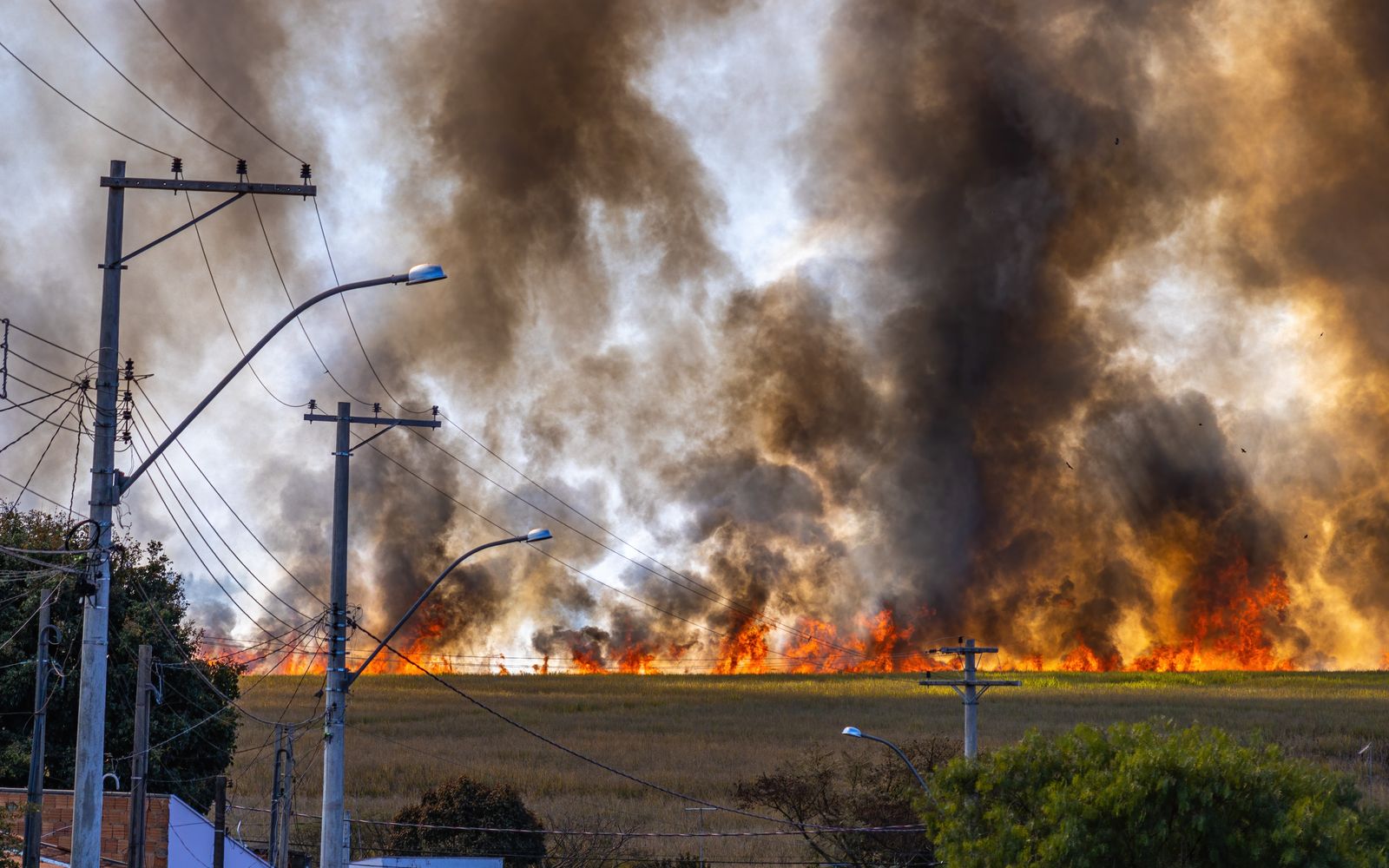
Wildfire smoke is a mix of gases and fine particles released when vegetation, structures, and soil burn. The dominant pollutant by health risk is PM2.5: fine particles small enough to lodge deep in the lungs and cross into the bloodstream.
Smoke also contains carbon monoxide, nitrogen oxides, ozone precursors, formaldehyde, benzene, polycyclic aromatic hydrocarbons (PAHs), and trace metals. When fires burn through homes, cars, and electronics (urban-wildland interface fires), the smoke picks up heavier metals, plastics, and asbestos.
Where it comes from
Wildfires, prescribed burns, and agricultural burning. In the western US, the wildfire season has lengthened by roughly 80 days since the 1980s and burned acreage has more than doubled. Smoke routinely travels thousands of miles: Canadian fires turned New York skies orange in 2023, and California fires regularly affect the Midwest and East Coast.
Smoke concentration at any given location depends on fire size, fuel type, weather, and distance. Inversions trap smoke near the surface; wind disperses it. Indoor levels typically run 30 to 80% of outdoor levels in a closed house, higher with poor sealing.
Health effects
Acute symptoms: burning eyes, runny nose, scratchy throat, cough, headache, and shortness of breath. Asthma attacks, COPD flares, and heart attacks rise sharply during smoke events. Hospital admissions for cardiovascular and respiratory problems track PM2.5 within 24 to 48 hours.
Emerging evidence suggests wildfire-specific PM2.5 may be more harmful per microgram than urban PM2.5, possibly due to the mix of toxic combustion products. Long-term exposure (multiple seasons) is linked to reduced lung function in children, increased dementia risk, adverse pregnancy outcomes, and higher all-cause mortality. People with asthma, COPD, heart disease, pregnant people, children, and older adults are most at risk.
How it's measured and typical levels
Smoke is tracked using PM2.5 monitors and converted to the Air Quality Index (AQI). The PurpleAir network and AirNow Fire and Smoke Map combine regulatory monitors with thousands of low-cost sensors for near-real-time coverage.
AQI categories for PM2.5 (24-hour):
- Good: 0 to 9 µg/m³ (AQI 0 to 50)
- Moderate: 9.1 to 35.4 µg/m³ (AQI 51 to 100)
- Unhealthy for sensitive groups: 35.5 to 55.4 µg/m³
- Unhealthy: 55.5 to 125.4 µg/m³
- Very Unhealthy: 125.5 to 225.4 µg/m³
- Hazardous: 225.5+ µg/m³
Peak wildfire days in heavily impacted areas routinely exceed 300 µg/m³ and have hit 1,000+ µg/m³ in extreme cases.
What you can do
When AQI is above 100, sensitive groups should stay indoors. Above 150, everyone should limit outdoor activity. Above 200, cancel outdoor exercise.
Indoors, close windows and doors, set HVAC to recirculate, and run a portable HEPA air purifier sized for the room (look for a Clean Air Delivery Rate of at least two-thirds of the room's square footage). A DIY "Corsi-Rosenthal box" (box fan plus four MERV 13 filters in a cube) provides high-CADR cleaning for $80 to $120 and was developed specifically for wildfire smoke.
Outdoors, wear a NIOSH-approved N95 (or KN95 with a tight seal) for short trips. Surgical masks, bandanas, and cloth masks do not filter PM2.5. Have a 7-day supply of medication for anyone with asthma or COPD. Plan a "clean room" with the best air cleaner and least window area for sleeping during multi-day events.
Sources
- Wildfire Smoke: A Guide for Public Health Officials (AirNow, 2021)
- Strategies to Reduce Exposure Outdoors (US EPA)
- Protecting Workers and the Public from Wildfire Smoke (NIOSH/CDC, 2025)
- Wildfire Smoke Impacts on Respiratory Health (US EPA HERO)
- AirNow Fire and Smoke Map
- CARB Smoke Ready California
- EPA Guide to Air Cleaners and Wildfire Smoke
- Corsi-Rosenthal Box (UC Davis)
This article is for educational purposes only. Canairy does not provide medical advice, diagnosis, or treatment. Talk to a qualified health professional about your specific situation.