Air quality news
Belgium's High Fens Fire and Colorado's Insurance Reform Test — August 16, 2026
Canairy · 4 min read · 2026-08-16
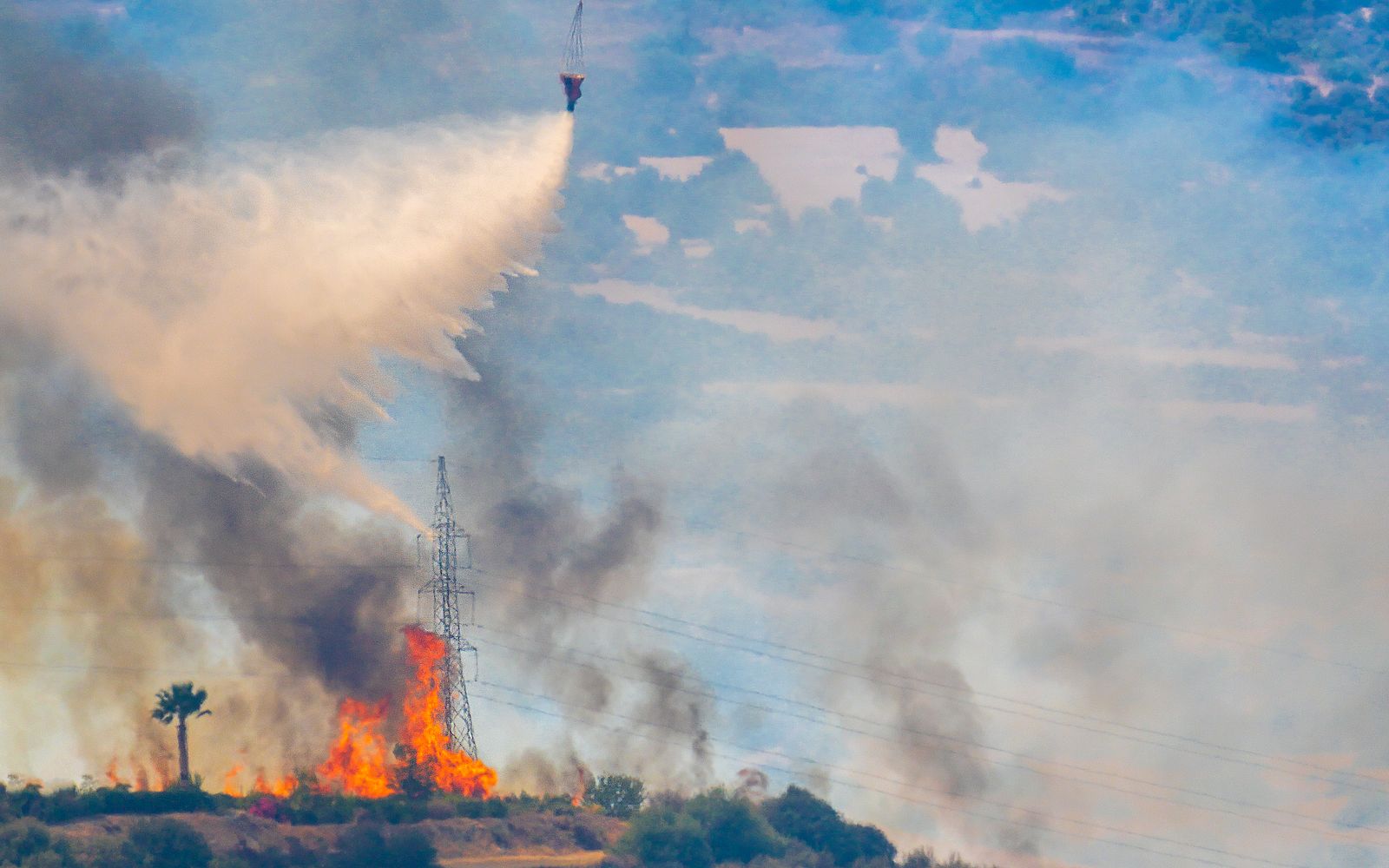
Europe's difficult fire summer moved north today, into a Belgian peat bog that is proving very hard to put out. In the US, a Colorado fire that started in June is becoming a test case for how homeowners get made whole afterward, and new research looks at who is breathing the smoke.
Belgium's High Fens burns in one of the country's worst fires
Firefighters worked through Sunday on a wildfire in eastern Belgium that has burned more than 27 square kilometers (10 square miles) of the High Fens, a large nature reserve, in what media describe as one of the worst wildfires in the country's recent history, the Associated Press reports. About 600 residents in Waimes and Bütgenbach, in Liège province near the German border, were told to evacuate Saturday as winds shifted and smoke spread through the area. Tourists were advised to leave, and a nearby gymnasium opened to receive evacuees.
More than 250 emergency personnel have been deployed, Liège provincial Gov. Hervé Jamar said, including over 100 Belgian and German firefighters alongside police, military and civil protection staff. Belgium activated the European Union's civil protection mechanism, and as WDIV reports, Sweden sent two water-bombing aircraft while three more helicopters arrived from the Netherlands and the Czech Republic.
No homes had been affected as of Sunday morning, though the fire remained close to residential areas and heavy smoke persisted. Across the border in Monschau, Germany, officials said the fire was about 3 kilometers (2 miles) away and recommended that people in three outlying districts leave temporarily, because they could not rule out health risks from the smoke. The fire follows weeks of unusually hot, dry weather — parts of Belgium reached about 37 C (98.6 F) on Friday — and the reserve's mix of heathland and peat bogs has made the flames harder to contain.
Colorado's Aspen Acres fire tests the state's insurance reforms
The Aspen Acres fire, the seventh-largest wildfire in Colorado's recorded history, destroyed more than 300 homes as it burned 102,000 acres across four counties after igniting on June 29. It was 72% contained as of Friday, burning in remote areas and no longer threatening homes.
State insurance commissioner Michael Conway told the Denver Post that the fire will be "one of the first big tests" of the laws Colorado passed after the 2021 Marshall fire — measures meant to get coverage to homeowners who had been denied it and to make policies more affordable. The paper profiles Bob Griggs, 88, who fled his 40-acre Beulah Valley property in an old pickup on June 29 and watched his 1876 home burn half an hour later. He had no homeowners insurance and little savings.
A study on smoke and prenatal air quality
Emissions of a half-dozen harmful air pollutants from vehicles and industry have fallen by nearly 80% since the Clean Air Act was signed in 1970. A new study from University of Maryland, College Park researchers, published Thursday in Frontiers in Environmental Health, finds that growing wildfire activity is "systematically offsetting prenatal air quality gains" from those reductions, Ars Technica reports.
Prenatal exposure to wildfire smoke raises the likelihood that babies are born too early or too small. The authors found that low-income, rural and Indigenous populations bore a disproportionate share of wildfire's contribution to poor air quality. Senior author Michel Boudreaux, an associate professor of health policy and management, said the study's main contribution is its focus on a population that is particularly at risk.
Sources
- Firefighters battle massive wildfire in Belgium's High Fens — The Associated Press
- Firefighters battle a massive Belgian wildfire that forced hundreds to evacuate — WDIV ClickOnDetroit
- Aspen Acres fire is first test of Colorado property insurance reforms — The Denver Post
- Wildfire smoke now bigger prenatal threat than human sources of air pollution — Ars Technica
Canairy aggregates publicly reported air-quality and wildfire news and summarizes it in plain English, with links to the original sources. This is educational information, not medical or emergency advice. In a wildfire or air-quality emergency, follow guidance from local authorities.