Air quality news
Ross Fire Reaches 80,000 Acres and an EPA Disclosure Rollback — August 26, 2026
Canairy · 5 min read · 2026-08-26
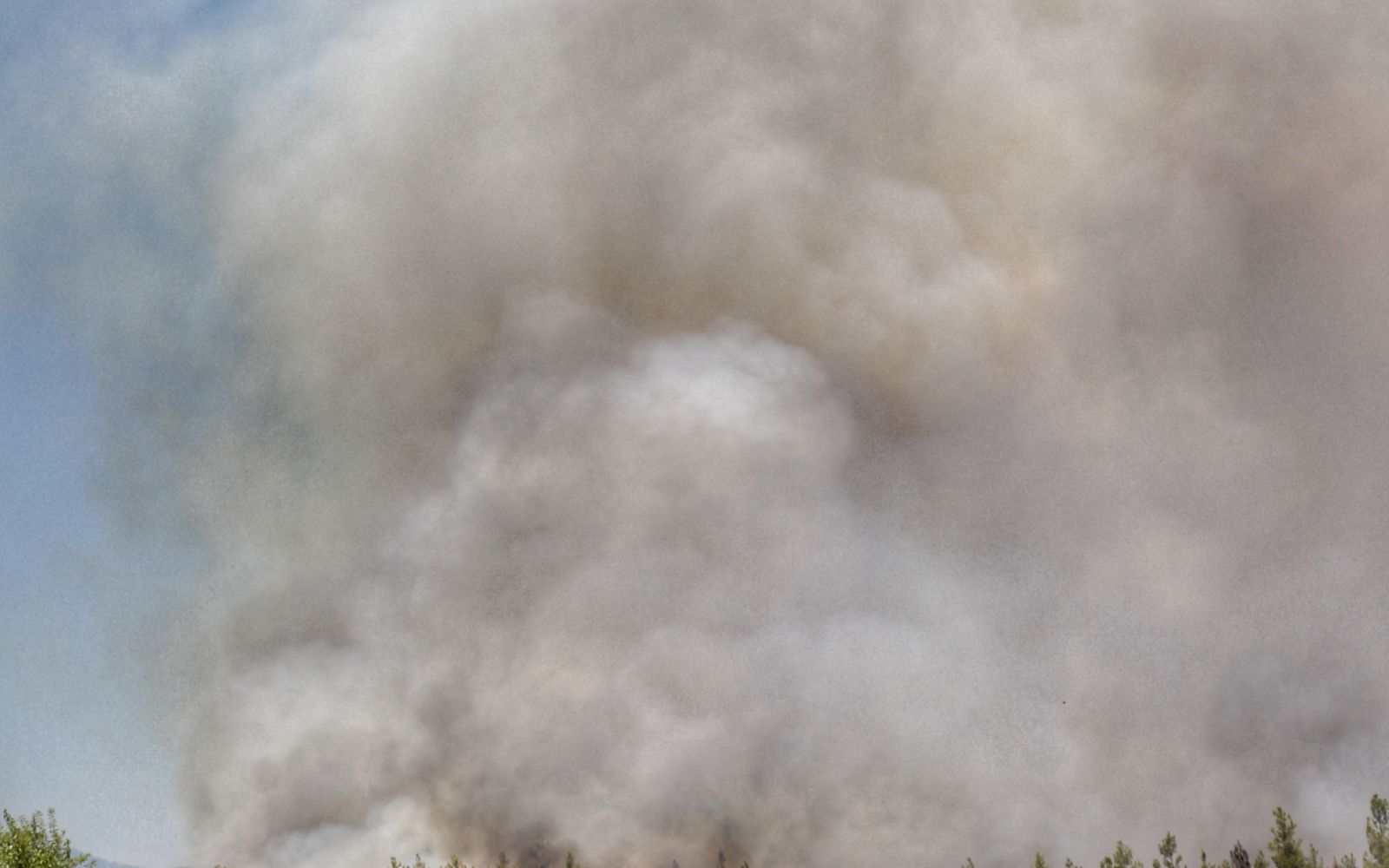
North Texas stayed the center of the day's fire news, with the Ross Fire nearly doubling in size overnight and smoke drifting across the region. Away from the fire line, the EPA proposed loosening a pollution disclosure rule, and researchers started looking at what happens when smoke and extreme heat arrive together.
The Ross Fire reached 80,000 acres
The Ross Fire, which started Monday afternoon in Palo Pinto County about 60 miles west of Fort Worth, had burned 80,000 acres and was 12% contained as of Wednesday morning, FOX 4 News reports. The fire has since moved north into Jack County.
Firefighters have struggled with the fire's size, its rapid spread, and constantly shifting winds. Several structures in remote areas have burned, and hundreds of residents are either on high alert or under mandatory evacuation orders. Gov. Greg Abbott announced that FEMA approved a grant request to help fund the firefighting effort. The cause has not been reported, and officials have not said when they expect full containment.
Smoke could show up well beyond the fire
Smoke from the fires in Palo Pinto and Jack counties could be visible in other parts of North Texas, FOX 4 News reports in its Wednesday forecast. A weak front brought isolated showers, lighter winds, and slightly lower fire danger, with highs between 99 and 103 degrees under a Heat Advisory rather than an Extreme Heat Warning.
The relief is short. By Thursday the front heads south and takes the rain chances with it, and another dry stretch follows. If you are downwind of a fire this size, it is a reasonable few days to keep windows closed and check conditions before spending a long stretch outside.
What Texans are being asked to donate
Palo Pinto County has received so many water donations that it is running out of room to store them, and says money is the more useful contribution right now, The Dallas Morning News reports. A county emergency services spokesperson said equipment is getting damaged in the field.
The American Red Cross North Texas Region is working with the city of Jacksboro on an evacuation center at the Twin Lakes Activity Center. United Way of Palo Pinto County has been helping people who lost homes and is asking for financial support.
One heat dome is behind fires in two states
A strong area of high pressure parked over the western and southern U.S. is tying the Texas and Nevada fires together, ABC17News reports. High pressure traps hot air near the surface, suppresses rain, and pushes temperatures well above normal.
Months of below-normal rainfall in both states left vegetation critically dry. The report describes it as a self-reinforcing cycle: less rain means drier vegetation, and drier vegetation means fires spread faster and burn hotter. The Hawk Fire in Nevada has been burning since the weekend and forced tens of thousands of Reno residents to evacuate.
Researchers are studying smoke and heat as one problem
University of Michigan scientists are partnering with Pacific Northwest researchers on a NASA-funded project, backed by an $894,452 grant, to help communities handle wildfire smoke and extreme heat at the same time, MLive reports. The work includes health officials in Oregon.
Heidi Huber-Stearns, who directs the University of Oregon's Center for Wildfire Smoke Research and Practice, said the long-term effects of repeated smoke exposure are still being studied, but even brief episodes can disrupt daily life and carry risks like asthma flare-ups. U-M professor Marie O'Neill noted that smoke travels far, and that Detroit has been ranked the most polluted city in the world more than once in recent years because of smoke drifting in from elsewhere.
The EPA proposed making some pollution disclosure voluntary
The EPA has proposed making public disclosure of air pollution from minor sources voluntary rather than mandatory, leaving the decision to state and local officials, TNW reports. The change would cover the diesel generators clustered around data centers.
Operators often split permits across individual generators so no single unit crosses the threshold for stricter federal review. Northern Virginia holds roughly 10,500 diesel generators at data centers with a combined capacity approaching 27 gigawatts. Nitrogen oxides are the main concern because they form ground-level ozone. Sierra Club senior adviser Jeremy Fisher said the plan "opens the door to silence communities concerned about pollution."
Sources
- North Texas wildfire burns 80,000 acres, is 12% contained — FOX 4 News
- Dallas Weather: Isolated storm chances and a break from extreme heat — FOX 4 News
- Here's how you can help with the Ross wildfire in North Texas — The Dallas Morning News
- Ross fire burns 50,000 acres while heat dome moves toward Missouri — ABC17News.com
- U-M researchers target the dangerous double threat of wildfire smoke and extreme heat — M Live Michigan
- The EPA wants to make data centre pollution disclosure optional — TNW
Canairy aggregates publicly reported air-quality and wildfire news and summarizes it in plain English, with links to the original sources. This is educational information, not medical or emergency advice. In a wildfire or air-quality emergency, follow guidance from local authorities.