Air quality news
Texas' Ross Fire Sets a Record and Big Sur's Plaskett Fire Slows — September 5, 2026
Canairy · 5 min read · 2026-09-05
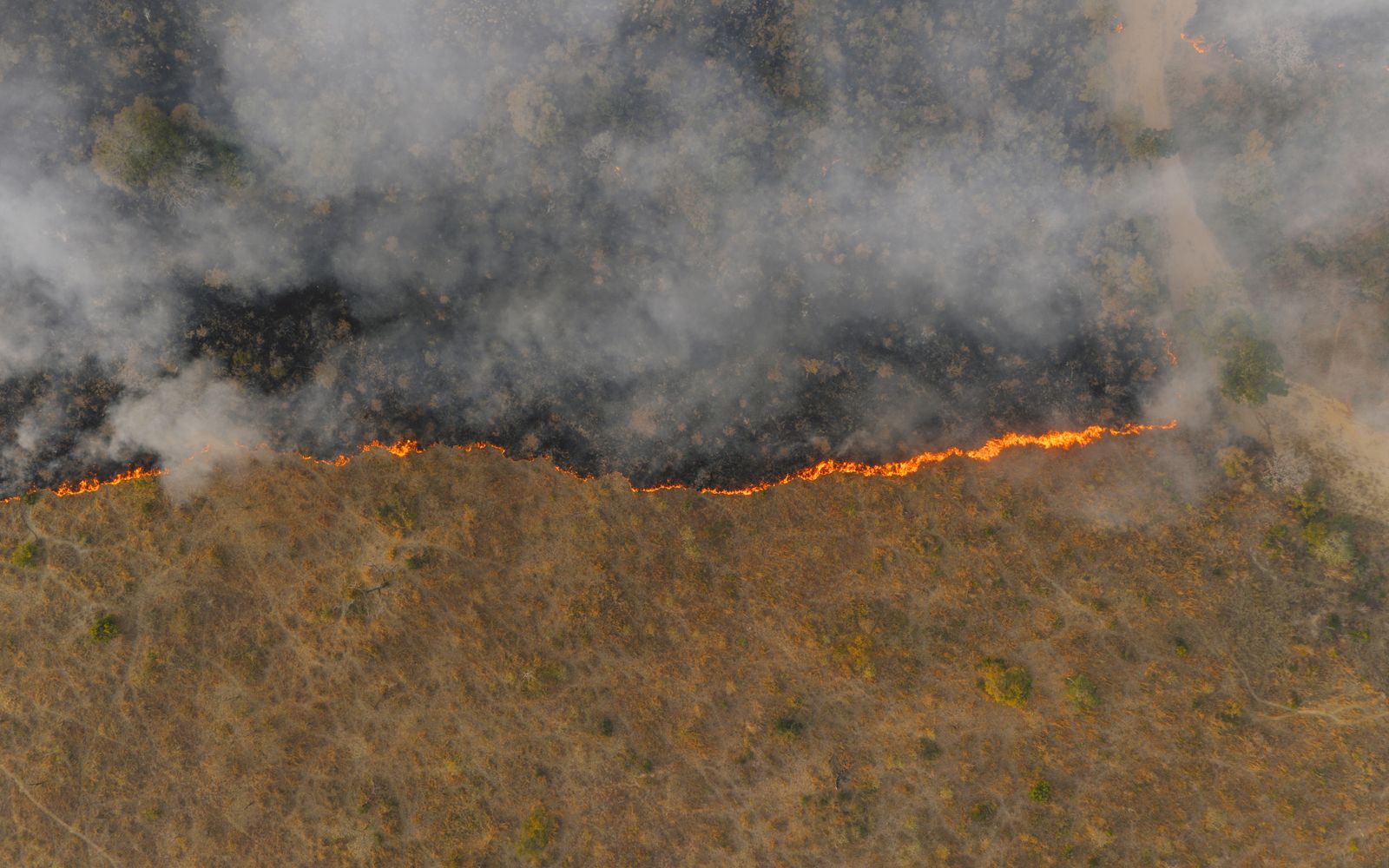
Two large fires set the tone today. In North Texas, the Ross fire earned a place in the state's record books. In California, crews reported steady progress on the two biggest blazes burning there. Elsewhere, ozone rather than smoke was the problem.
The Ross fire is the largest Texas summer wildfire since 2005
The Ross fire has burned an estimated 90,400 acres across Palo Pinto and Jack counties and was 38% contained Friday, according to the Texas A&M Forest Service. The Dallas Morning News reports that it is the largest summer wildfire in the state's detailed records, which begin in 2005 and count fires from June through September.
The fire has destroyed 167 structures, including 18 occupied homes, and damaged 95 more. Firefighters have saved 453 structures and no deaths have been reported. Two firefighters had minor injuries. Investigators determined the fire was human-caused and started with equipment or vehicle use along a roadside near Palo Pinto on August 24. Across all seasons, it ranks 15th among Texas wildfires since 2005.
Containment rises on California's two largest fires
The Plaskett fire in Monterey County, the largest wildfire burning in California, reached 23% containment Friday, up from 19% a day earlier. SFGATE reports the Big Sur blaze stood at 29,768 acres, a slight increase from Thursday, with more than 2,000 personnel assigned. It was first reported August 26 in the Los Padres National Forest, and no injuries or structure losses have been reported.
The Timber fire, also in Big Sur and the state's second largest, held at 25,346 acres and 23% containment, Cal Fire said. It has been burning since August 8 with 1,348 personnel assigned, and one firefighter has been injured. A stretch of Highway 1 was closed from the Kirk Creek Campground to the Monterey–San Luis Obispo county line.
An ozone advisory in North Carolina's Triad
Forsyth and Guilford counties were under a Code Orange air quality advisory from 10 a.m. to 8 p.m. Friday because of high ground-level ozone, the Winston-Salem Journal reports, with heat in the forecast alongside it.
Ozone is the pollutant that tends to peak on hot, sunny afternoons, which is a good reason to move a run or a long walk to the early morning on days like this.
Researchers fly over Salt Lake City to study its ozone problem
Chemistry students from the University of Montana spent seven weeks this summer collecting airborne data over Salt Lake City as part of the Salt Lake City Summer Ozone Study, the Daily Inter Lake reports. The campaign uses research flights to measure pollution emissions and how they contribute to ozone.
More than 50 years after the Clean Air Act passed, Salt Lake City still does not meet the EPA's ozone standard. The article points to several reasons this is hard in the arid West: heat and mountains create stagnant air that traps pollutants, the city sits above 4,300 feet, the Great Salt Lake is evaporating, and wildfire smoke adds another variable. Partners on the study include the University of Utah, NASA, the National Center for Atmospheric Research and the Utah Department of Environmental Quality.
California fire agencies back a new public alert app
More than 60 California fire agencies have signed on to AwareCA, a statewide public safety app meant to deliver first-responder-verified fire information directly to the public, with another 60 in the process of joining. The San Diego Union-Tribune reports that if all 120 join, the app would cover roughly 75% of the state's population. It is free to download and the official launch is expected later this month.
The idea came out of the January 2025 Eaton and Palisades fires, when about 75 million users visited Cal Fire's website over three-plus weeks and roughly 85% of them were on mobile devices. Participating agencies pay Intterra, the company that built and owns the app, a licensing fee ranging from $12,000 to $500,000 a year.
Court documents describe the firework that started the Chelan Hills fire
A probable cause affidavit filed Thursday in Douglas County Superior Court in Washington says an 18-year-old arson suspect was recorded shooting Roman candle-style fireworks from the bed of a moving truck on July 4, starting the Chelan Hills wildfire. The Spokesman-Review reports the device was a "Trooper Turret," eight Roman candles arranged in a circle.
The fire burned 15 square miles, killed one resident, injured six firefighters, burned 19 homes and caused more than $6 million in damage. A witness called 911 shortly after midnight to report people in two vehicles shooting fireworks at each other along Highway 97 near Chelan Falls, with sparks landing in roadside brush. Investigators found the firework on the side of the road about 12 hours later.
Sources
- Ross fire is Texas' largest summer wildfire since 2005 — The Dallas Morning News
- Monterey Co.: Containment Of Plaskett Fire, State's Largest, Rises To 23% — SFGATE
- Poor air quality, heat in store for Forsyth, Guilford NC — Winston-Salem Journal
- UM students study pollution over Salt Lake City — Kalispell Inter Lake
- New app to provide California wildfire updates to the public directly from fire agencies — San Diego Union-Tribune
- Chelan Hills fire caused by Roman candle 'turret,' court documents say — Spokane Spokesman-Review
Canairy aggregates publicly reported air-quality and wildfire news and summarizes it in plain English, with links to the original sources. This is educational information, not medical or emergency advice. In a wildfire or air-quality emergency, follow guidance from local authorities.