Air quality news
Lucas Fire Stand-Down, Firefighter Shortages and a Shell Settlement — September 19, 2026
Canairy · 5 min read · 2026-09-19
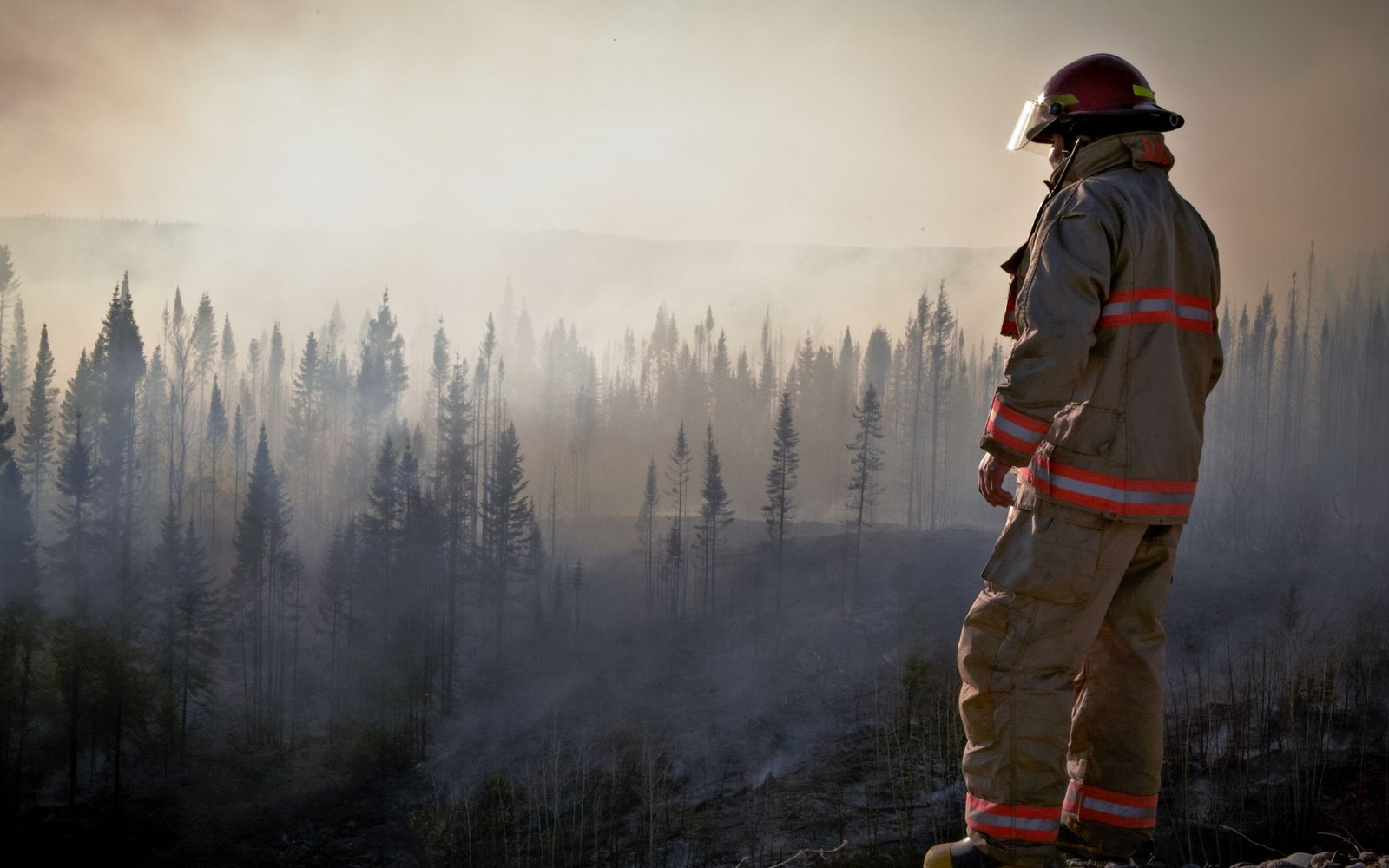
The Lucas Fire on the Lake-Mendocino county line is winding down, while firefighters across the country describe a season in which there were not enough people or engines to go around. Elsewhere, Pennsylvania reached a $15 million air-quality settlement with Shell, a San Diego military base turned to goats for wildfire prevention, and scientists flew into firestorm clouds to learn how they behave.
Lucas Fire reaches 84% containment as crews stand down
Cal Fire crews are beginning to demobilize from the Lucas Fire, which grew to 4,128 acres near Potter Valley on Mendocino County's border with Lake County and is now 84% contained, SFGATE reports. Crews are focusing on restoring environmentally impacted areas, and Cal Fire asked drivers to expect extra traffic around the fire area as resources leave.
Evacuation orders remain in effect for two areas in Lake County; those for Mendocino County have been lifted. Up to 1,300 personnel were assigned to the lightning-caused fire, first reported September 10. Earlier in the week, celebrity chef Guy Fieri and his foundation served dinner to crews at the incident command base, according to the Press Democrat, which noted Cal Fire has called it the largest wildfire in the Sonoma-Lake-Napa area this year.
Firefighters describe a record season with too few crews and engines
Wildfires have burned more than 8.5 million acres in the U.S. this year, and at the peak of the season there were not enough people or equipment to fight them, CBS News reports. Firefighter Cody Turcotte described arriving at a fire in Spokane, Washington, last month with five engines to join just two others that had been battling the blaze alone for hours, and being told 16 hours into the shift that no additional engines were coming.
Those fires became the Spokane Complex Fire, which destroyed close to 900 structures and burned over 10,000 acres; officials called it the worst natural disaster in the region's history. Experienced firefighters and officials from local, state and federal agencies told CBS News that last year's cuts to the U.S. Forest Service made the strain worse.
Shell to pay $15 million for air violations at Pennsylvania plant
Shell Chemicals Appalachia will pay $15 million to settle air-quality violations at its Beaver County petrochemical facility under a consent agreement with the Pennsylvania Department of Environmental Protection, PennLive reports. The violations at the Potter Township plant span from 2023 through August 2026, and Shell acknowledged it exceeded emission limits for air contaminants.
The payment splits into a $7.5 million civil penalty and $7.5 million to establish a Beaver County Environment and Community Fund. Shell must also submit plans to improve the facility's elevated flare system, complete wastewater treatment upgrades, and keep filing monthly emissions reports that DEP posts online. This is the second major settlement between DEP and Shell in recent years; the first, in 2023, was for $10 million.
Miramar deploys 471 goats to build fuel breaks
Marine Corps Air Station Miramar in San Diego has turned loose 471 goats across 600 acres to eat the dry brush and invasive weeds that fuel wildfires, the New York Post reports. The pilot program, called Operation Goat Rope, is described as the first of its kind on a U.S. military installation.
The base says targeted grazing lets it clear steep canyon terrain where heavy machinery cannot go, without chemical treatments or spark hazards. The fuel breaks are intended to slow a fire's advance around military infrastructure and neighboring civilian communities.
Scientists flew into firestorm clouds this summer
Researchers on the INSPYRE mission flew aircraft into pyrocumulonimbus clouds, the severe storm clouds that can form over the most intense wildfires, PBS News reports. These clouds act as giant chimneys that push large amounts of smoke high into the atmosphere, and they can generate their own weather, including dry lightning that ignites new fires miles away and downdrafts that produce storm-force winds.
Researchers said the smoke and the cloud itself can make it hard to see the flames, which can hinder evacuations, and that better prediction of when these clouds form is a key goal of the work.
Sources
- Mendocino Co.: Crews Begin Standing Down As Lucas Fire 84% Contained — SFGATE
- Guy Fieri serves warm meals to give thanks to crews working to contain Lucas Fire — Santa Rosa Press Democrat
- Firefighters struggle with staffing, equipment shortages amid record wildfire season: "We're running thin" — CBS News
- Shell to pay $15M for air quality violations at Pa. petrochemical plant — PennLive
- San Diego military base turns to goats to prevent wildfire spread — New York Post
- 'An unworldly experience.' Why scientists flew into firestorm clouds this wildfire season — PBS News
Canairy aggregates publicly reported air-quality and wildfire news and summarizes it in plain English, with links to the original sources. This is educational information, not medical or emergency advice. In a wildfire or air-quality emergency, follow guidance from local authorities.