Air quality news
Oregon's Record Fire Season and Yosemite's Dome Fire — September 30, 2026
Canairy · 4 min read · 2026-09-30
Today's news looks back on a record fire season in Oregon, checks in on a slow-moving fire in Yosemite, and covers a new global report on ozone pollution. There is also a rare bit of good news for air quality in Northeast Ohio.
Oregon's 2026 fire season set a record
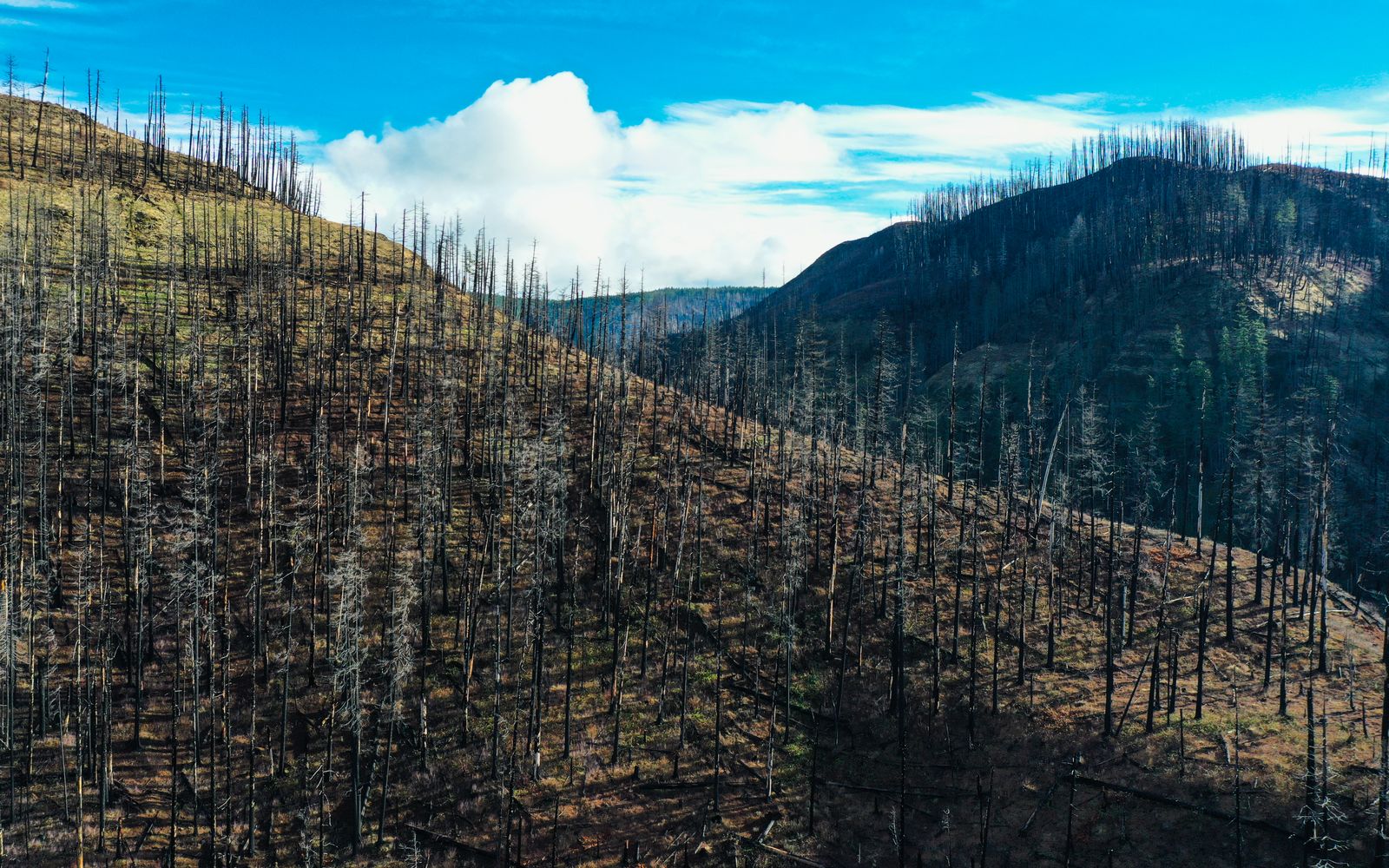
Wildfires burned 2.1 million acres across Oregon this year, the most since reliable records began in 1992, the Salem Statesman Journal reports. Suppression cost an estimated record $1.4 billion, according to data from the Northwest Coordination Center. Two lightning storms in July started many of the fires, almost all of them east of the Cascades.
Two firefighters were killed. The fires burned about 217 homes and structures, forced thousands to evacuate, and brought poor air quality to some areas for three weeks. Officials said so many fires burned at once that they "overwhelmed the system."
Yosemite's Dome fire was started by an abandoned campfire
The Dome fire near Yosemite's southern entrance in Mariposa County is entering a third week, and its cause is now listed as an abandoned campfire, according to the Spokesman-Review. The fire started on September 15. Fire restrictions have been in place at or below 8,000 feet since August 1.
The fire has moved slowly north and northeast toward Glacier Point Road, which closed September 23 and now serves as a contingency line. About 250 firefighters are working overnight shifts. The park remains open, though an area from Wawona north to Badger Pass and Glacier Point Road is closed, including trails to Chilnualna and Bridalveil falls. If you're headed to the park, check current closures before you go.
A new report finds widespread ozone exposure worldwide
About 34 percent of the world's population was exposed to "extremely poor" ground-level ozone this year, and some 51 percent to "very poor" or "extremely poor" levels, according to a new Atmosphere Watch report from the Copernicus Atmosphere Monitoring Service (CAMS), as Scientific American reports. Both categories exceed World Health Organization guidelines. Asia saw the highest levels, followed by North America and Europe.
Al-Monitor reports that record heatwaves and wildfires in Europe and North America helped drive this year's ozone. ABC7 notes that North American ozone levels have stayed relatively unchanged despite decades of effort, with wildfire emissions and climate change likely slowing progress. Ozone tends to peak on hot, sunny afternoons, so mornings are often the better time for outdoor exercise on high-ozone days.
Ohio wants to end E-Check after Cleveland meets air standards
Governor Mike DeWine wants to end Northeast Ohio's vehicle emissions testing program, known as E-Check, after the Cleveland region met federal air quality standards, cleveland.com reports. The change still needs U.S. EPA approval. The state plans to seek public comment next month and submit its request by the end of the year, so drivers should keep their next appointment for now.
Sources
- Record 2026 Oregon wildfire season burned 2.1M acres, cost $1.4B — Salem Statesman Journal
- Dome fire has burned in Yosemite National Park for 2 weeks. We now know the cause — Spokane Spokesman-Review
- Dangerous ozone threatened half of world's population this year — Scientific American
- One third of world population exposed to harmful air pollution: monitor — Al-Monitor
- Nearly 40% of global population exposed to dangerous ozone pollution in 2026: Report — KABC-TV
- Could E-Check finally be coming to an end in Northeast Ohio? Capitol Letter — cleveland.com
Canairy aggregates publicly reported air-quality and wildfire news and summarizes it in plain English, with links to the original sources. This is educational information, not medical or emergency advice. In a wildfire or air-quality emergency, follow guidance from local authorities.