Air quality news
Great Salt Lake Dust and Gas Stove Pollution in Restaurant Kitchens — October 6, 2026
Canairy · 4 min read · 2026-10-06
Today's news covers dust in Utah, the air inside restaurant kitchens, and what a clean-air designation in Northeast Ohio does and doesn't mean. Two more stories look at how wildfire smoke affects birds and at new software meant to spot wildfires earlier.
Utah weighs the cost of Great Salt Lake dust
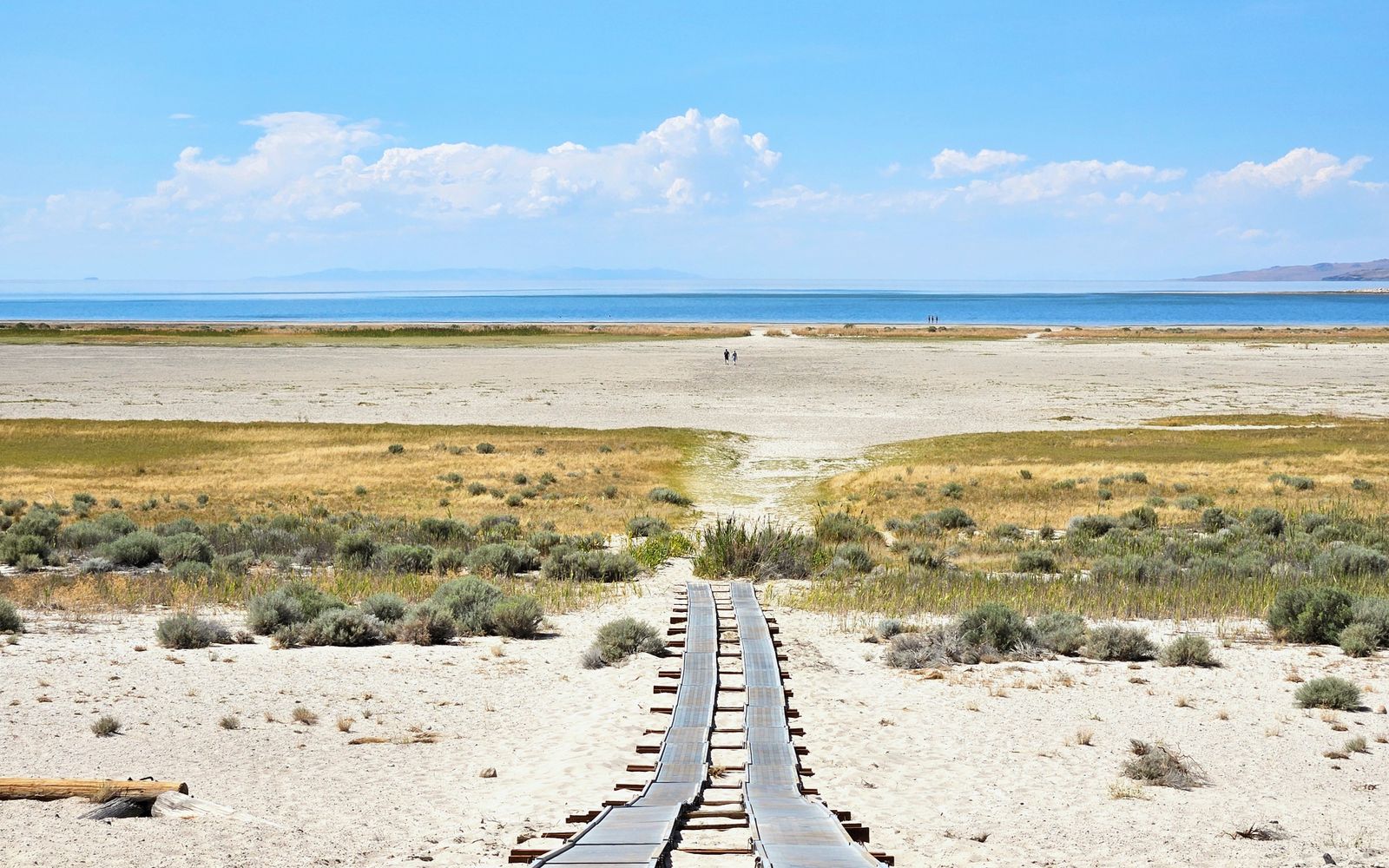
More than 800 square miles of Great Salt Lake lakebed are now exposed as water levels keep falling, the Deseret News reports. University of Utah researchers say about 70 of those square miles are active dust hotspots, which could grow to more than 100 square miles as groundwater declines. The university estimates the dust will cost Utah about $116 million a year in health costs, including roughly seven premature deaths each year.
University of Utah researchers warn that dust mitigation could cost billions. Bryce Bird, director of the Utah Division of Air Quality, said the state needs to find ways to address it, but that other air pollution concerns are more pressing for public health right now.
Gas stoves expose restaurant workers to pollution and heat
A new study led by California researchers measured air and temperature inside 27 commercial kitchens, the Los Angeles Times reports. In 70% of kitchens with gas cooking, nitrogen dioxide was above federal benchmarks during work hours. Of 19 gas kitchens where temperature was tracked, 13 went above 90 degrees.
None of the three all-electric kitchens had excessive pollutants or heat. The study, by PSE Healthy Energy and Stanford University, sampled restaurants in California, Pennsylvania and New York and was published in Environmental Research Letters.
What Northeast Ohio's ozone attainment means
The EPA has redesignated the seven-county Cleveland area as meeting the 2015 federal ozone standard, effective June 29, 2026, cleveland.com explains. The standard is judged on a three-year average of each monitor's fourth-highest ozone day, and Cleveland's 2023–25 value came in at 70 parts per billion, right at the limit.
That is a long-term regulatory measure, not a daily forecast. One bad ozone day won't change the designation, and the daily Air Quality Index is still the better guide to whether today is a good day to be active outdoors.
How wildfire smoke affects birds
Cornell ecologist Olivia Sanderfoot is working to build a new field called "smoke ecology," NPR reports. Her question is how birds and other wildlife cope when smoke from distant fires drifts over their habitat, as Canadian wildfire smoke did in Western Massachusetts this summer.
As Sanderfoot puts it, smoke can travel hundreds to thousands of miles, so a smoke event's footprint is far larger than the fire itself.
LSU's AI wildfire tool wins XPRIZE recognition
DeepFire, an AI tool built by LSU researchers, the consulting firm Ailectric and others, received special recognition and a $100,000 prize from the XPRIZE Wildfire competition, the Baton Rouge Advocate reports. It draws on satellites, smoke sensors and cameras to predict where fires may start, watch for early signs, and model how they spread.
Lead scientist Supratik Mukhopadhyay said the tool is 90% accurate at predicting wildfires four to seven days ahead.
Sources
- Great Salt Lake dust: A problem Utah can't afford to fix or ignore — Deseret News
- Restaurant workers face hidden dangers from gas stoves, including pollution and extreme heat — Los Angeles Times
- Northeast Ohio ozone attainment: What it means and what it doesn't — cleveland.com
- When wildfire smoke rolls in, what happens to the birds? — NPR
- Can wildfires be predicted? LSU researchers win recognition for AI wildfire tech — Baton Rouge Advocate
Canairy aggregates publicly reported air-quality and wildfire news and summarizes it in plain English, with links to the original sources. This is educational information, not medical or emergency advice. In a wildfire or air-quality emergency, follow guidance from local authorities.