Air quality news
Spokane's Air-Monitoring Vans, U.P. Lightning Fires and El Niño — October 19, 2026
Canairy · 3 min read · 2026-10-19
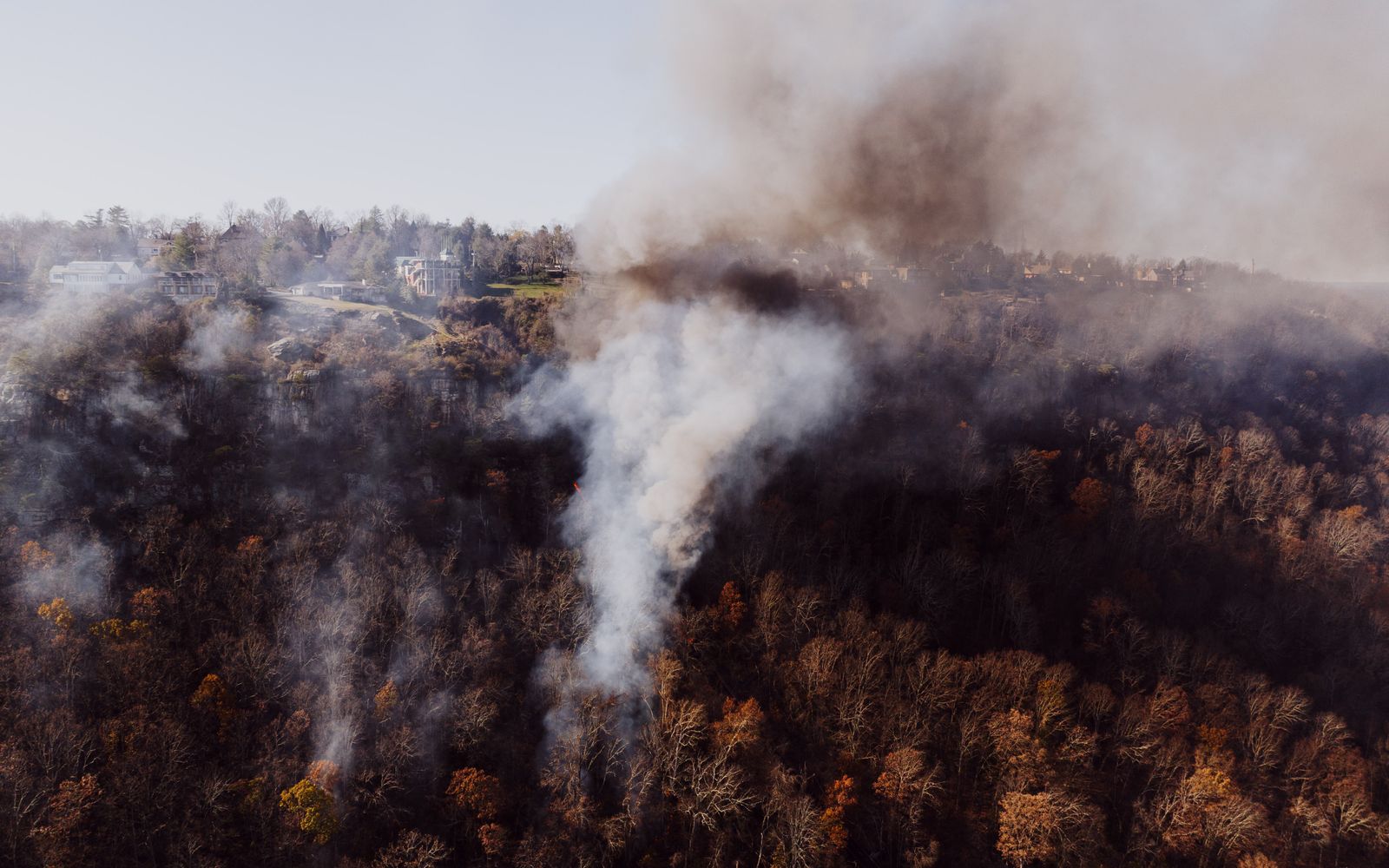
A new kind of air monitoring is coming to Washington, Michigan investigators have answers on two Upper Peninsula fires, and forecasters weigh what a strong El Niño could mean for fire risk across the country.
Mobile air monitors head for Spokane this winter
The Washington State Department of Ecology plans to send a small fleet of air-monitoring vehicles into 20 overburdened communities starting in December, the Spokesman-Review reports. Spokane, Spokane Valley and a few tribal areas are among them. Three minivans and one 24-foot truck will measure roughly 36 pollutants, including carbon monoxide, lead, nitrogen dioxide, ozone, particulate matter and sulfur dioxide.
The one-time study is expected to run until late winter 2027 and was funded with $10 million from the Legislature in 2023. Most of the state's 150 fixed monitoring sites report hourly averages, while the vans are expected to collect continuous data at under a minute's resolution. Officials say communities asked for a more detailed picture of their air.
Lightning started two Upper Peninsula fires
Investigators have confirmed that lightning caused both the Black River Fire and the Craig Lake Fire in Michigan's Upper Peninsula, MLive reports. Charring patterns on a group of cedar trees, checked against lightning strike maps, pointed to the cause of the Black River Fire. The Black River Fire is 70% contained and the Craig Lake Fire is 90% contained.
The cause of the Ridge Fire, about 466 acres and 50% contained 10 miles northwest of Marquette, is still under investigation. Residents along North Basin Drive remain on "ready" status. Craig Lake State Park north of Craig Lake and the Teddy Lake Yurt stay closed through the end of October.
El Niño may shift wildfire risk north
A strengthening El Niño could raise wildfire risk across parts of the northern U.S. while lowering it in much of the South and Southwest, Newsweek reports. The National Interagency Fire Center says El Niño has developed and is strengthening, and the Climate Prediction Center puts the chance of a "very strong" event this fall and winter at greater than 90 percent.
In winter, El Niño generally tilts the odds toward wetter, cooler weather across much of the southern U.S. and warmer, drier conditions across parts of the north. Research from NOAA and the Cooperative Institute for Research in Environmental Sciences suggests an autumn El Niño can shape fire risk into the following spring and summer.
Sources
- A souped-up scientific van used to monitor air quality set to hit streets of Spokane soon — Spokane Spokesman-Review
- Michigan wildfire investigators confirm lightning as cause of 2 U.P. blazes — MLive
- Map Shows States Facing Higher Wildfire Risk During El Niño — Newsweek
Canairy aggregates publicly reported air-quality and wildfire news and summarizes it in plain English, with links to the original sources. This is educational information, not medical or emergency advice. In a wildfire or air-quality emergency, follow guidance from local authorities.